


Japanese Confectionery Exports Hit Record High, Driven by Inbound Tourism and Weak Yen
Merxwire
21 May 2026, 16:29 GMT+10
Supported by a surge in inbound tourism and a weaker yen, Japanese confectionery exports continue to grow, with Asian markets expanding steadily and demand also rising across emerging regions such as Southeast Asia and North America.
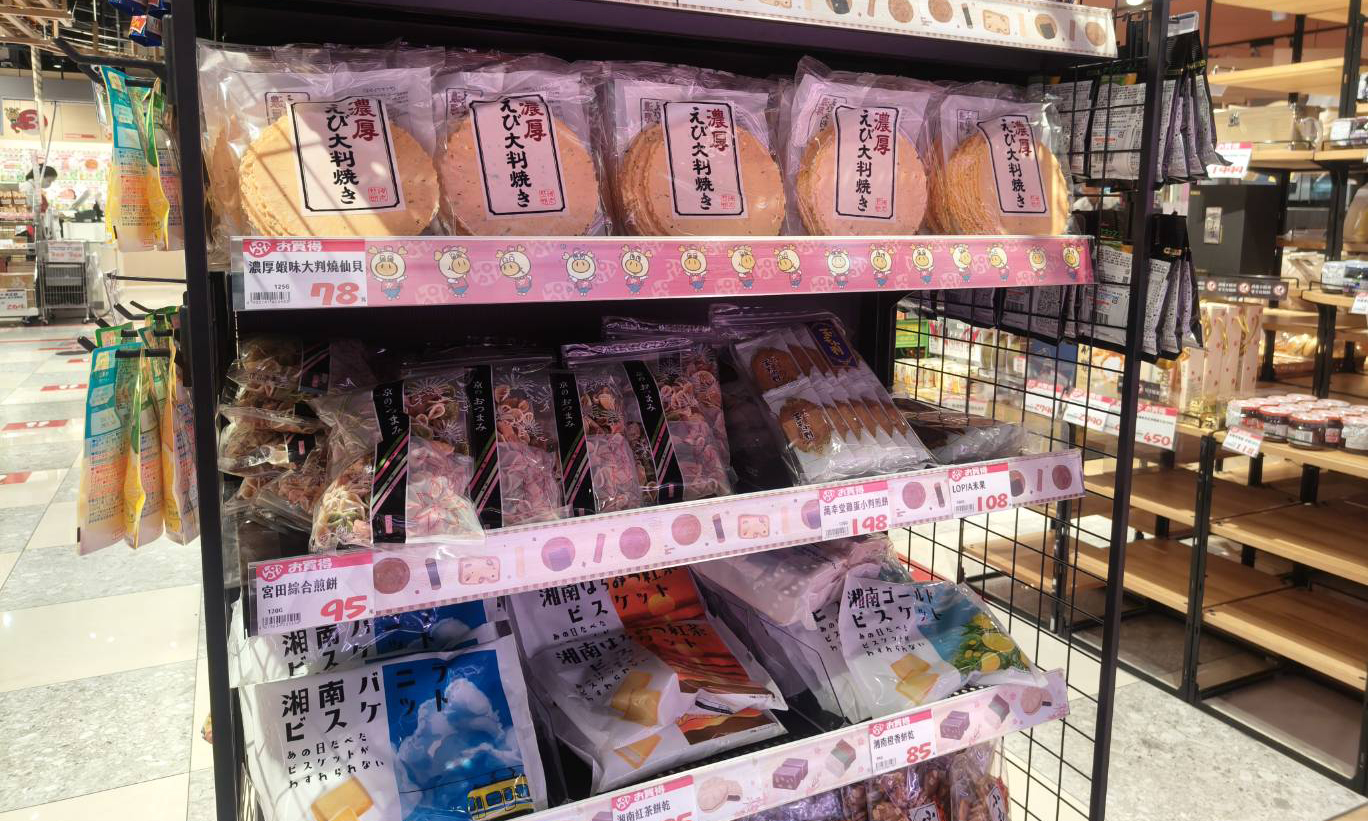
TOKYO, JAPAN (MERXWIRE) - Japanese confectionery remains highly popular among overseas consumers, serving not only as an important symbol of Japanese food culture but also as one of the most sought-after souvenirs for international visitors. Despite the impact of U.S. tariff measures, Japan's confectionery exports and overall market size have both reached record highs, supported by currency depreciation and strong tourism demand.
According to data released by the All Nippo Kashi Association, Japan's confectionery exports rose 6.0% year-on-year in 2025, reaching 50.5 billion yen, a new historical high. In addition, the number of foreign visitors to Japan also reached approximately 42.68 million, another record high. Driven by tourism demand and rising average spending per item, total confectionery purchases are projected to reach around 470 billion yen.
Overall, Japan's confectionery industry in 2025 continues to show a "high value, low volume" trend. While total production has declined for the second consecutive year, production value and retail sales have both exceeded the previous year, marking five consecutive years of growth. This reflects a structural shift toward higher-value and premium products.
By category, products such as candies, biscuits, senbei rice crackers, fried snacks, and other confectionery items recorded increases in production, value, and retail sales. In contrast, chocolates, chewing gum, rice-based snacks, traditional Japanese sweets, Western-style sweets, and snack foods saw declines in production, although their sales value and retail performance still increased.
In terms of exports, candies reached 13.4 billion yen (up 7.7%), chocolate confectionery reached 10.8 billion yen (up 23.9%), and other confectionery products totaled 6.1 billion yen (up 8.6%). While growth to the United States has slowed due to tariff measures-rising 6.3% in 2025 compared with 15.8% in 2023 and 26.1% in 2024-overall exports continue to expand.
Imports also reached a record high, rising 11.6% year-on-year to 110.5 billion yen. Chocolate-based confectionery accounted for the largest share at 29.9 billion yen, followed by biscuits and cookies at 18.8 billion yen, and candies at 17.4 billion yen.
By export destination, the United States remained the largest market, accounting for 19.6%, followed by Hong Kong (16.7%), China (14.5%), Taiwan (13.5%), and South Korea (8.9%). Asia continues to play a key role in driving export growth.
In recent years, Asia has become the fastest-growing region for Japanese confectionery exports. Due to geographical proximity, cultural familiarity, and sustained travel interest in Japan, consumers in Taiwan, Hong Kong, and South Korea show strong acceptance of Japanese snacks and sweets. Many travelers continue purchasing souvenirs not only during their trips but also through cross-border e-commerce and proxy shopping services.
Products such as biscuits and senbei crackers are particularly popular in Taiwan, where Japanese brands often launch limited-edition packaging and short-term pop-up campaigns. Hong Kong consumers tend to prefer premium gift boxes and traditional Japanese sweets, while the South Korean market has seen rapid growth in convenience store snacks and collaboration products, driven by social media and unboxing culture.
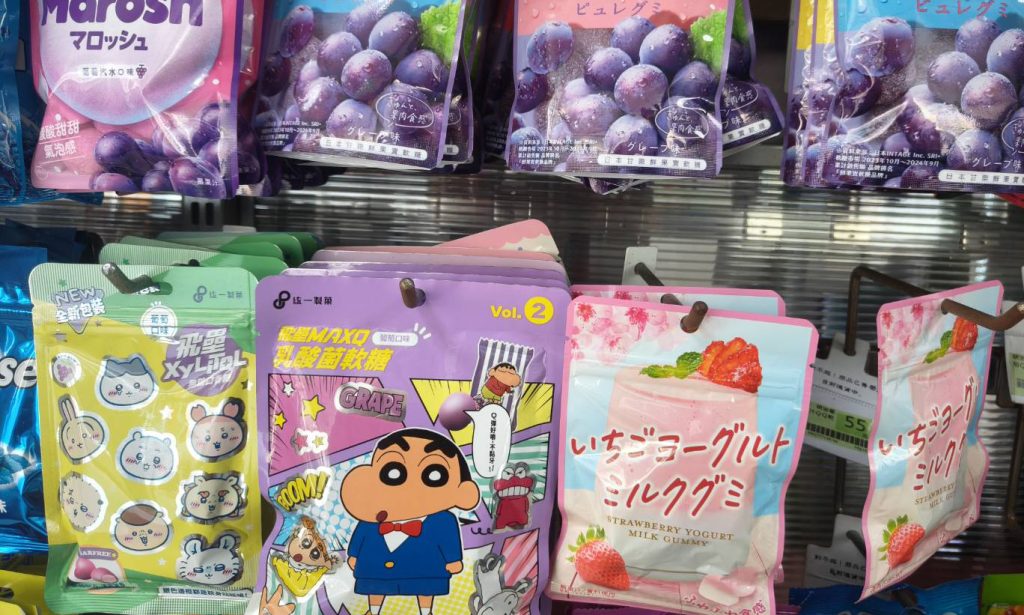
A traveler from Taiwan, Ms. Lin, said she always buys locally exclusive Japanese sweets when visiting Japan. "Japanese confectionery is beautifully packaged, and many products can only be found in Japan. They are perfect as gifts, and my family and friends love them," she said, adding that the weaker yen has made Japanese souvenirs feel more affordable in recent years.
Meanwhile, the United States remains Japan's largest export market for confectionery. However, growth has slowed due to tariffs and rising logistics costs. Industry sources note that while demand for premium imported food remains strong in the U.S., transportation costs, customs procedures, and tariff uncertainty have become key challenges for expansion in North America.
A U.S. traveler, David Chen, said Japanese confectionery offers wide variety, from traditional wagashi to convenience store snacks. "I especially like Japanese candies and seasonal limited editions. I always bring a lot back to share with friends," he said, adding that Japanese sweets are not just food but also a cultural experience.
Demand in Southeast Asia and North America is also increasing for matcha-based sweets, wagashi, and Japanese chocolate. As Japanese culture, anime, and travel content continue to spread on social media, consumers increasingly view Japanese confectionery as both a cultural experience and a symbol of high quality. In response, Japanese companies are expanding offerings of low-sugar, health-oriented, and small-packaged products to match global consumption trends.
The Consumer Aesthetics and Cultural Tourism Society Japan noted that as overseas markets expand, Japanese confectionery is evolving beyond food into a cultural experience. The association recommends that companies strengthen storytelling and regional cultural connections, while integrating tourism experiences and limited-edition product strategies to enhance long-term competitiveness in global markets.
Media Contacts:
Consumer Aesthetics and Cultural Tourism Society Japan
PR Agency:
MERXWIRE INC.
Ada Huang
[email protected]
SOURCE: Consumer Aesthetics and Cultural Tourism Society Japan
 Share
Share
 Tweet
Tweet
 Share
Share
 Flip
Flip
 Email
Email
Subscribe and Follow
Get a daily dose of Business Sun news through our daily email, its complimentary and keeps you fully up to date with world and business news as well.


News RELEASES
Publish news of your business, community or sports group, personnel appointments, major event and more by submitting a news release to Business Sun.
More InformationU.S. stocks surge, Dow Jones adds 645 points

NEW YORK, New York - U.S. and global stock markets closed on a mixed but largely positive note Wednesday, with U.S. indexes posting...
Report says U.S. investigating Chinese shipping container makers

WASHINGTON, D.C.: The United States is investigating whether Chinese companies deliberately reduced global production of shipping containers...
StanChart plans 7,000 job cuts, cites AI and automation drive

HONG KONG: Standard Chartered said on May 19 that it will eliminate more than 7,000 jobs over the next four years as the bank increases...
Nasdaq Composite slides 220 points as U.S. stocks shed ground

NEW YORK, New York - U.S. and global stock markets closed with a broad selloff on Tuesday, driven by heavy losses in technology shares...
Corporate costs from Iran conflict top $25 billion worldwide

LONDON/NEW YORK CITY: The war involving the United States, Israel and Iran has already cost companies around the world at least US$25...
NextEra-Dominion merger targets soaring AI-driven power demand

NEW YORK CITY, New York: NextEra Energy has agreed to acquire Dominion Energy in an all-stock deal valued at about US$66.8 billion,...
Amazon phases out support for Kindles released in 2012 and earlier

SAN FRANCISCO, California: Amazon is ending support for Kindle e-readers released in 2012 and earlier, prompting frustration among...
Musk loses court fight with OpenAI as scrutiny of Altman grows

OAKLAND, California: OpenAI has emerged victorious in its closely watched courtroom battle with Elon Musk, preserving its path toward...
NextEra-Dominion merger targets soaring AI-driven power demand
NEW YORK CITY, New York: NextEra Energy has agreed to acquire Dominion Energy in an all-stock deal valued at about US$66.8 billion,...
SpaceX speeds up IPO plans, eyes June 12 Nasdaq listing

NEW YORK CITY, New York: SpaceX is preparing to go public as early as June 12 on the Nasdaq, according to people familiar with the...
Samsung chairman apologizes as labor talks restart

SEOUL, South Korea: Samsung Electronics and its South Korean labor union resumed pay negotiations on Monday with the help of a government...
OpenAI and Musk clash in closing arguments over AI future
OAKLAND, California: Elon Musk and Sam Altman exchanged sharp accusations in closing arguments as a closely watched trial over the...
